
The Surfer's Starter Package for Bondi Beach
The gear, timing and local know-how you need to start surfing at Bondi Beach — board sizes, wetsuit thickness, and where to paddle out first.
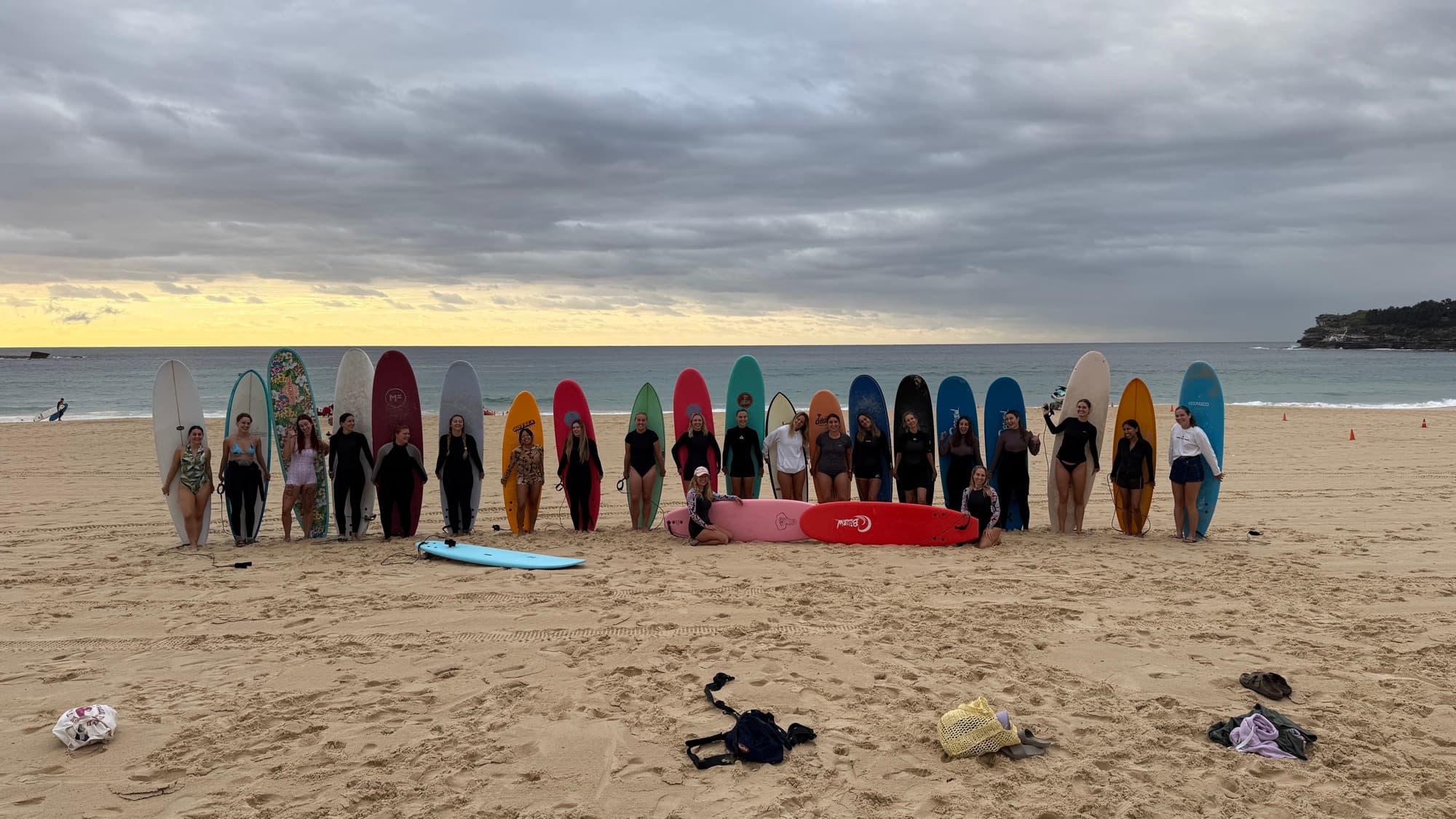
Bondi Beach is one of the most iconic surf spots in the world — and one of the most intimidating to paddle out at for the first time. The lineup is busy, the locals are fast, and every board-buying guide online seems to assume you already know what a fin key is.
This is the guide we wish we'd had: the complete starter package for anyone learning to surf at Bondi Beach. Not a sales pitch — just the honest, practical stack of gear, timing and local know-how you need to actually get in the water with confidence.
Before we start: we're not a surf school
Important to say upfront — Bondi Surf Girls does not run surf lessons. We're a women's surf community: we rent boards, store boards, and meet every Wednesday at sunrise to paddle out together. What we're not is an instructor-led surf school.
If you want proper one-on-one or group surf lessons in Bondi, we genuinely recommend Let's Go Surfing just up the beach on the north end. They've been teaching people to surf at Bondi for over twenty years, their instructors are brilliant with total beginners, and plenty of the women in our Wednesday crew did a lesson or two with them before finding their feet.
With that clear, here's the gear and local knowledge side of the starter package — the part we actually know about.
What the Bondi lineup expects from a beginner
Before we talk gear, it helps to know what you're walking into. Bondi is a beach break with two main ends — north and south — divided by a rip that the locals affectionately call the Backpackers' Express. Conditions shift fast. A waist-high, glassy morning can turn into onshore chop by 11am.
Beginners should aim for the north end (between the flags, when they're up), on a low-to-mid tide, with swell under 3ft and light offshore (westerly) winds. Your starter package needs to let you paddle out safely in those conditions, wipe out without hurting yourself, and come back in when you're tired.
That rules out a lot of what you might see advanced surfers using. Here's what actually works.
1. Your first surfboard: go soft, go long
7'0–9'0 softboard
recommended first board
A softboard (also called a foamie) is the single most important piece of gear for your first six months. Not because it's cheaper — though it is — but because it floats you better, paddles faster, and is dramatically safer when it inevitably hits you in the face.
Length: aim for 8'0 as a default. Lighter surfers can go 7'6; bigger frames or anyone over 180cm will be happier on an 8'6 or 9'0.
Shape: wide, thick, with a rounded nose. The extra volume means more waves caught and less exhausted paddling.
What to skip on day one: hardboards of any length, shortboards under 6'6, fish shapes, and anything described as "performance." They exist for a reason — they just aren't the reason you're starting.
If you're not ready to buy, renting is the sensible move. You'll try different sizes before you commit, and you won't spend a Sunday hauling a brand-new board up Bondi Road after deciding surfing isn't for you (it is, but still).
2. Your wetsuit: match the season, not the Instagram photo
Sydney water temperatures swing a lot more than people expect. Here's what you actually want in Bondi month by month:
- December to March (summer, 20–24°C): 2/2mm springsuit or even a bikini + rashie on the hottest days.
- April to May (autumn, 18–21°C): 2/2mm full suit or 3/2mm. This is the sweet spot where half the lineup is overdressed.
- June to August (winter, 15–18°C): 3/2mm steamer is standard. Locals who surf daily move to 4/3mm with boots in the coldest weeks.
- September to November (spring, 16–20°C): 3/2mm early, dropping back to 2/2mm by October.
If you're buying one wetsuit to cover the whole year, get a 3/2mm steamer. It's slightly warm in January and slightly cold in July, but it'll keep you surfing every month. You can upgrade to a summer suit once you're committed.
Fit matters more than brand. A wetsuit should feel snug everywhere, with no pockets of loose neoprene at the lower back (that's where water flushes in and ruins your session). If you're unsure, rent before you buy — same logic as the board.
3. The rest of the starter kit
The accessories people forget about:
- Leash: comes with most rental boards. If you're buying, match leash length to board length — 8ft board, 8ft leash.
- Surf wax: you need it for a hardboard, but softboards have textured foam and don't. Saves you $5.
- Rashie or UV top: non-negotiable in Sydney sun, especially for the paddle-out stare. A long-sleeve rashie doubles as a chafe guard under a wetsuit.
- Reef-safe sunscreen: zinc stick for the face, cream for everywhere else. Reapply after every session — saltwater strips sunscreen faster than sweat.
- Towel + change robe: Bondi changing rooms are functional but packed on weekends. A change robe (fancy word for a oversized hooded towel poncho) saves you. Not essential for day one, essential by month two.
- Ear plugs: surfer's ear is real and unpleasant. $15 now saves an ENT appointment in ten years.
4. Where to keep your gear if you're local
Here's the Bondi-specific piece nobody tells you when they sell you a board: most locals don't live somewhere with a garage. A 9ft softboard doesn't fit in a studio apartment. It doesn't fit in most cars. And hauling it up and down Bondi Road for every session is what kills a new surf habit faster than anything else.
The solve is board storage near the beach. Drop the board after work on Friday, paddle out before work on Tuesday, never touch a staircase with a 9-footer again.
5. Your first session: the actual game plan
Gear sorted, here's what a first session looks like:
- Check the forecast the night before. Willyweather, Surfline or the Coastalwatch app. You want swell under 3ft, winds offshore or under 10 knots, and a low-to-mid tide.
- Arrive 30 minutes before your intended surf time. Park, get changed, wax or check fins, walk down, watch the water for ten minutes. Where are people sitting? Where are they catching waves? Where are the rips?
- Paddle out at the shoulder, not through the peak. On smaller days there's a channel towards the south end where the wave is less powerful. Use it.
- Stay between the flags. Lifesavers at Bondi are pros. If conditions change, they'll let you know. Paddling outside the flags on a crowded day is how beginners get in trouble fast.
- Leave one wave for someone else. This is Bondi's unwritten rule. Don't snake, don't drop in, and if you paddle for one and miss — that's fine, the next set is 60 seconds away.
6. The fastest way to improve: surf with other women
This is the part nobody sells you, because you can't sell it. You improve fastest not by buying the right board or watching YouTube tutorials, but by surfing regularly with people who are slightly better than you, who make you feel safe paddling out, and who are genuinely stoked when you catch a wave.
Bondi Surf Girls runs a free community surf every Wednesday at 6:30am from the Bondi Pavilion. No coaches, no lessons — just a crew of women from absolute beginner to intermediate, paddling out together. Show up once and you'll understand why it works.
The minimum viable starter package
If you want the TL;DR:
- Softboard, 7'6–9'0, rent before you buy
- 3/2mm steamer wetsuit, or a 2/2mm if you're only surfing summer
- Leash (included with rentals)
- Rashie, reef-safe sunscreen, ear plugs
- Storage or a car — one or the other
- A Wednesday morning free — because you'll need it once you start
That's it. Everything else is a bonus, a brand upgrade, or a distraction. Keep it simple, get in the water twice a week, and by the end of three months you'll be the one walking past the guide and thinking about where the next swell is landing.
See you out there.